
Cathay Pacific airways
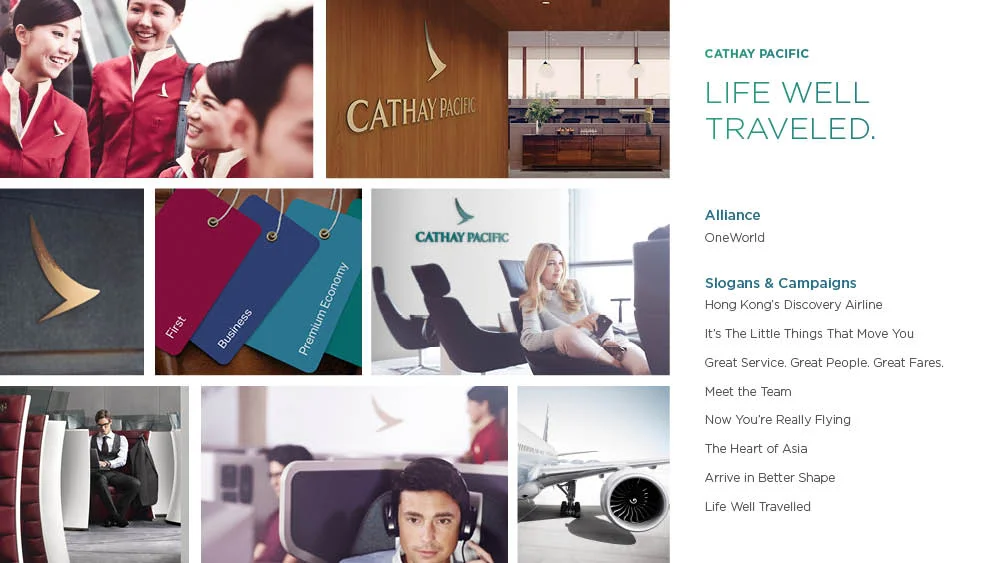
About CATHAY PACIFIC
In 1946, American businessman Roy Farrell and Austrialian pilot Sydney de Kantzow establishes Cathay Pacific in Shanghai. In the beginning, the pair imported oysters from Australia operating a World War II Douglas DC-3 named “Betsy.” The company moves to Hong Kong within that year and soon begins to transport passengers in Asia.
In 1948, a British-owned company now known as the Swire Group purchased the airline. Under the direction of John Swire and his sons in the years to follow, Cathay expands through covering multiple routes, company mergers, purchases of new aircraft. Today Cathay Pacific Airways and its sister airline Dragonair services extensive routes out of Hong Kong.
Strengths
Profit Model
Hong Kong Based Network: 70 Cities in 32 Countries / Outports Provide Extensive Reach / Excellent Cargo Service / Good Flight Times
Product Offerings
Business Travel: Strong Business Class Image “The Wing”
Lounge Revamp: Sophisticated, Contemporary Style / Consistency with First Class Products / Connection to Art & Culture / Quality Food by Resident Chef / Noodle Bar
Target Customers
Core Customers Identified & Relationship Built / Very Strong Customer Loyalty from Business Travelers / Helps Cathay’s Image / Hong Kong as Asia’s Financial & Fashion Capital
Service Offerings
Choose Your Own Meal: Dietary & Religious Considerations / 21 Diverse Asian & Western- Inspired Choices / Congee / Unlimited Cup of Noodles
In-Flight: Personable / Caring / Detail- Oriented / Professional / Clear & On-Task / Friendly
Weaknesses
Profit Model
Hong Kong Based Network: Indirect Flights via Hong Kong / Disorganized Pet Transport
Product Offerings
Business Travel: Perhaps Too Business-y?
“The Wing” Lounge Revamp: Only for First Class Travelers
Target Customers
Business Travelers: Professional Setting May Be Challenging to Get Customer Buy-In From Different Segments (Especially When Building Future Customer Relationships with Younger Audience)
Service Offerings
Choose Your Own Meal: Variety of Meals & Equipment on Board (Rice Cookers, Skillets, Toasters) Add Weight to Aircraft
In-Flight: Equal Treatment Projects “Everyone is the Same” Attitude
Opportunities
Profit Model
Hong Kong Based Network: Project Future Trends to Consider New or Exotic Routes
Product Offerings
“The Wing” Lounge Revamp: Lounges for All Travelers / Set Boarding Gates as Lounges
Target Customers
Business Travelers: Research, Identify & Capture Future Customers at a Young Age / Business & Leisure is Blurring
Service Offerings
Choose Your Own Meal: Partner with Local Talents / Resident Chef of “The WIng” Innovates All Meals / Continue to Promote Cathay Eateries & Recipes
Threats
Profit Model
Hong Kong Based Network: Other Airlines Setting Sights on Expanding into (East) Asia / Hard to Break into Local Market with Established Airline
Product Offerings
China Airlines Revamp Lounge in Taipei, Taiwan / Extreme Luxury by Etihad, Emirates / Bringing Color into Cabins
Target Customers
Business Travelers: Many Airlines Have Business Travelers at Its Core / Trend Moving Towards Leisure Travel
Service Offerings
Fresh Food is Already Expected, Not a Selling Point / Other Airlines Offering Customizeable, Diverse Meals
Singapore Airlines
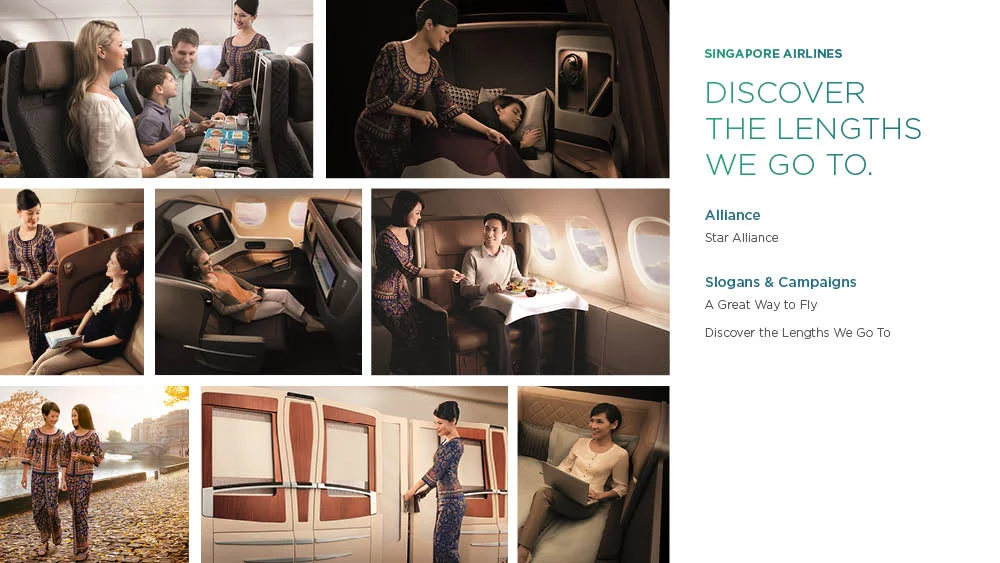
About Singapore Airlines
Originally Malayan Airways in the 40s and 50s, Singapore Airlines became the official carrier of Singapore after the country claimed independence from Malaysia. On May 1, 1947, the first flight from Singapore to Kuala Lumpur prompted the beginning of the airline. Three scheduled flights a week from Singapore to Malaysia soon expanded to encompass Indonesia, Vietnam, Burma, and other Southeast Asian countries.
Today, Singapore Airlines is one of the world’s top airlines known for superior cabin products, high service standards, and of course, the Singapore Girl.
STRENGTHS
Profit Model
Singapore Based Network: 60 Cities in 30 Countries / Superior Products & Service
Product Offerings
A380 First Class Suite: Backed by BMW Designworks / Research into Seating Habits / Privacy / Luxurious
Dining Utensils: Use Actual Utenils, Not Plastic
Target Customers
Leisure Travelers: Travelers to Singapore
Business Travelers
Luxury & Quality Driven Customers
Service Offerings
Book the Cook: Preorder Gourmet Food / International & Regional Dining / Epicurean Dining
SilverKris: Promotes Destinations/ Keeps Travelers Busy / Content by People
WEAKNESSES
Profit Model
Singapore Based Network: Flights to US, Transfer in Asia
Product Offerings
A380 First Class Suite: Embarrassing Encounters
Dining Utensils: Added Weight, Stealing
Target Customers
No Special Focus to Target Other Segment of Consumers / Solely Relies on Singapore to Sell Image
Service Offerings
Meals by Renowned Chefs: Cost & Time to Develop Menu / Have to Book in Advance
SilverKris: Limited Content / Curation Takes Time / Separate Microsite with Inconsistent Brand Language
OPPORTUNITIES
Profit Model
Singapore Based Network: Southeast Asia Tour Package
Product Offerings
First Class Suite: Open Contest Pitches by Design Firms
Dining Utensils: Sustainable, Lightweight Material
Target Customers
Leisure Travelers: Expand Focus to Surrounding Countries in Addition to Singapore
Service Offerings
Book the Cook: Food Contests to Develop Menu / Feature Specific Regions of Southeast Asian Cuisine
SilverKris: Generate Additional Content to Attract Young Customers
THREATS
Profit Model
Focus Moves to China & Indonesia
Losses from SilkAir Hurts Singapore Airline’s Profits
Low Cost Carriers & Slashing Prices
Product Offerings
Extreme Luxury by Etihad, Emirates
Increased Pressure to Spend
Target Customers
Leisure Travelers: Other Airlines Promote Singapore as Tourist Destination Already
Service Offerings
Other Airlines Attempting to Build Brand with Flight Attendants
British Airways
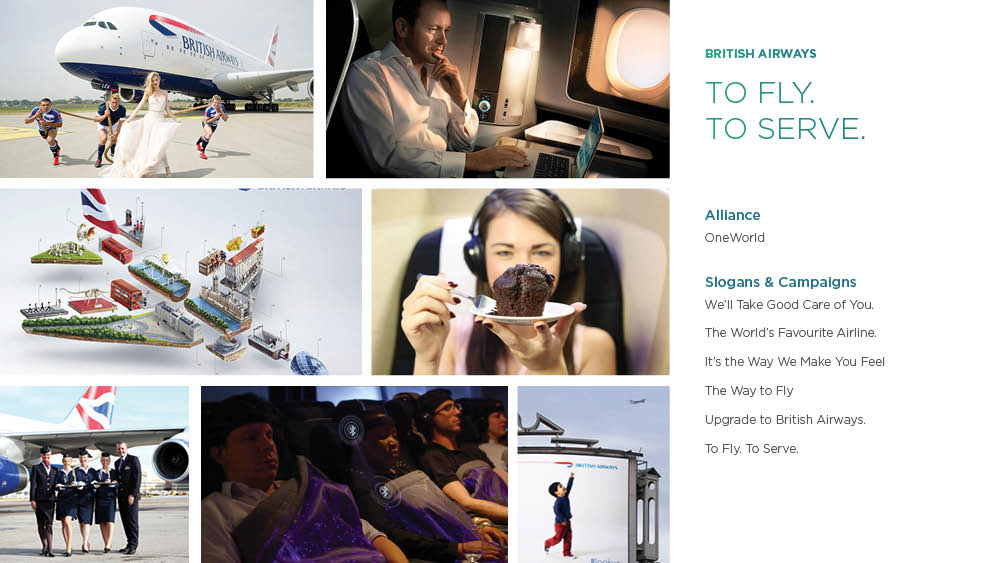
About British Airways
British Airways was born in 1974 as the result of a merger from British Overseas Airways Corporation (BOAC) and British European Airways (BEA). Even before its privatization in 1987, the airline was the official carrier of the United Kingdom.
On August 25, 2009, British Airways celebrated its 90th anniversary and launched their Heritage collection.
STRENGTHS
Profit Model
London Based Network: 183 Cities / Serviced by Heathrow Airport / Convenient & Easy Access
Product Offerings
First Class Cabin: First to Introduce Flat Beds / Luxurious Finishes
Happiness Blanket: Innovation Backed by Science Experts / Publicity & Press / Customer Satisfaction & Confidence Easily Understood
Target Customers
Business Travelers: Extensive Network of Lounges / OneWorld Alliance Opens Up Network of Flights & Lounges
Service Offerings
Sound Bites: Publicity & Press / No Unnecessary Additives in Food / Partnerships with Musicians
Paws & Relax Channel: Soothes Passengers / Collaborations with Various Animal Shelters
WEAKNESSES
Profit Model
London Based Network: Local Airlines May Be Cheaper to Take / Exotic Brand Image Attracts Customers to Experience
Product Offerings
First Class Cabin: Neutral / Lack of Exploration in Colors & Materials / Maybe Be Too Business Focused
Happiness Blanket: Cost & Time for R&D
Target Customers
Business Travelers: Already Heavily Targeted by Other Airlines / What Makes British Airways Stand Out?
Service OfferingsSound Bites: Skeptical Passengers / Cost & Time for R&D / Cost for Noise-Canceling Headphones
Paws & Relax Channel: Cost & Time
OPPORTUNITIES
Profit Model
London Based Network: Campaigns Showcasing UK as Desirable Destination / Look to Future Trends of Travel
Product Offerings
First Class Cabin: Innovative Seating / Maximize Interactions between Passengers
Happiness Blanket: Promote Interactions b/t Customers & Service Providers
Target Customers
Business Travelers: Open Up Target Market / Look to Future Trends of Travel
Service Offerings
Sound Bites: Collaborations with Musicians / Explore Menus / Economy Class
THREATS
Profit Model
Focus Moves to China & Indonesia
Product Offerings
Extreme Luxury by Etihad, Emirates
Increased Pressure to Spend
Happiness Blanket: Airlines Copy Innovation Process
Target Customers
Business Travelers: Line b/t Travel & Leisure Blends
Service Offerings
Sound Bites: Airlines Copy Innovation Process / Customers Start Bringing On Board Meals Uncurated by Airline
Etihad Airways
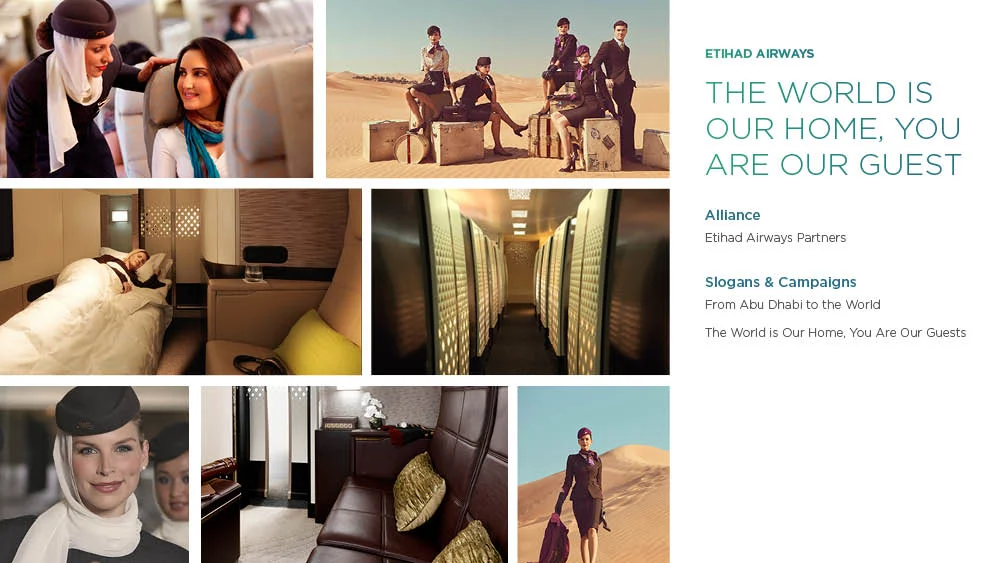
About Etihad Airways
Established in 2003, Etihad is the national airline of the United Arab Emirates. It is one of two airlines in the United Arab Emirates along with Emirates. A relatively new airline, Etihad has established itself as the standard of extreme luxury with the introduction of suites called “The Residence” and room service.
STRENGTHS
Profit Model
Abu Dhabi Based Network: 120 Destinations / Easy Access to Middle East / Recently Revamped Superior Products & Service
Product Offerings
The Residence A380: Bespoke Experience / Epitome of Luxury Travel / Captures New Target Customer & Audience (Private Jet Customers)
Onboard Dining: Culinary Experts / Arabian Inspired Cuisine / Extensive Tea Collection
Target Customers
Luxury Travelers
Family Travel
Service Offerings
The Residence Service: Trained Butlers Catered to Every Need / VIP Concierge Service / Seamless & Discreet Service / Personal Chef / Redefining Luxury & Service / Creation of New Jobs / Standardized Training of Butlers Results in Consistent Quality
WEAKNESSES
Profit Model
Abu Dhabi Based Network: Many Destinations not Direct / Codeshare Options Dilute Brand / Limited Amount of Flights & Routes in Americas & Asia
Product Offerings
The Residence A380: Etihad has to Outdo Itself / Maintain High Quality Products
Onboard Dining: Limited Meals due to Middle Eastern Dietary Restrictions / Menus & Options Add Weight
Target Customers
Luxury Travelers: Outdo Expectations / Customers May Become Jaded Family Travel: Expensive & Unaffordable
Service Offerings
The Residence Service: Investment into Right People / Expensive Training / Difficult to Retain Talent
OPPORTUNITIES
Profit Model
Abu Dhabi Based Network: Open Networks Up to Americas & Asia / Partner with Local Airlines
Product Offerings
The Residence A380: No Frills Travel / Look into Target Customer & Cater to Them
On Board Dining: Diverse Options / Regional Cuisine
Target Customers
Luxury Travelers: Consider No Frills Model
Family Travel: Family Packages
Service Offerings
The Residence Service: Bring Privacy Concept to Other Classes w/o Reducing Luxury
THREATS
Profit Model
Focus Moves to China & Indonesia
Low Cost Carriers & Slashing Prices
Product Offerings
Extreme Luxury by Emirates
Target Customers
Luxury Travelers: Some Travelers Just Want to Get from A to B, No Frills Necessary
Service Offerings
Other Airlines Attempting to Build Brand with Flight Attendants
Air France
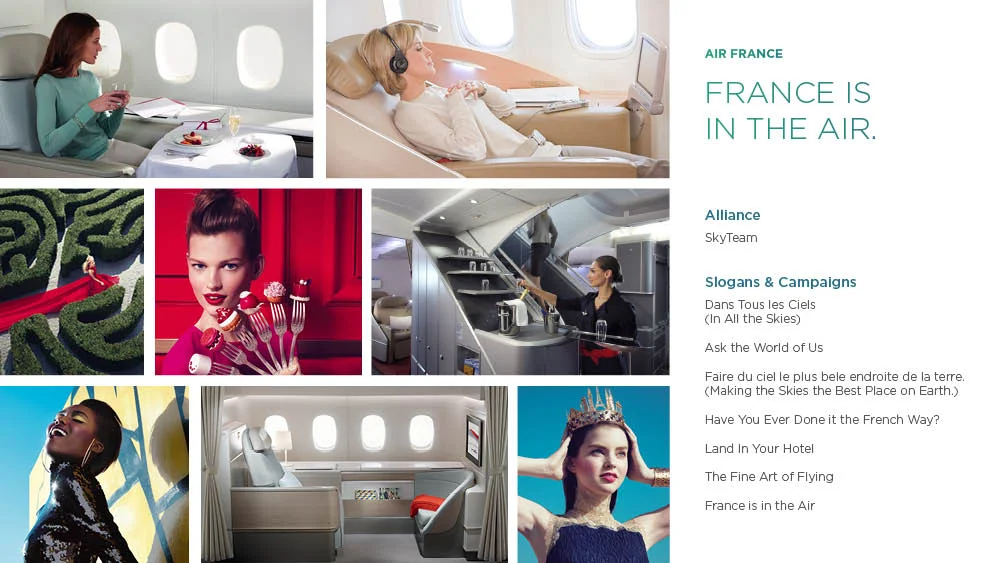
ABOUT AIR FRANCE
Air France was born on October 7, 1933 as the result of a merger from several French airlines. The airline soon became nationalized by the French government and was given complete control to the French air transport network. By then, Air France had established routes across Europe, North Africa, and the US.
In 2004, Air France merged with KLM Royal Dutch Airlines and reduction in the state’s ownership of the airline privatized the company. Today, Air France operates independently of KLM although both are owned by the same parent company.
STRENGTHS
Profit Model
Paris Based Network: 25 Cities + KLM Network / Shares KLM Destinations
Product Offerings
“La Premiere” First Class Cabin: Newly Revamped / Adjustable Privacy / 3 Sq. M. Space / Famous Amenities Bose & Givenchy / Superior (Wardrobe, 24-inch TV, Drawers)
Seat Options: Many Choices of Seats in Cabins
Target Customers
Chic, Fashionable French Women: Visual Design Language Reflects Target
Customer Wide Target Audience
Service Offerings
Meals by Renowned Chefs: Rotating Meals & Menus / A La Carte for Ordering Separately
AF Music: Features Works of Well-Known & Rising Artists / Building AF Lifestyle / Exclusive Content / Interactive APP
WEAKNESSES
Profit Model
Paris Based Network: Certain Routes Only Serviced by KLM / Countries in Asia Serviced by KLM (Taiwan, Philippines, Indonesia) / Fly via Amsterdam to Many Locations Around the World / Do I take KLM or Air France?
Product Offerings
Newly Revamped First Class Cabin: Only 4 Suites / Reduced Cabin Size / Feminine May Exclude Customers
Seat Options: Not Available on All Flights / Extra Charges Depending on Duration / Separate from Ticket Purchase
Target Customers
Wide Target Audience: Inconsistent Visual Design Language Among Different Classes
Service Offerings
Meals by Renowned Chefs: Cost & Time to Develop Menu / Customers Have to Pay for Additional Choices
AF Music: Time to Curate / Massive & Diverse Range / Music Taste is Subjective
OPPORTUNITIES
Profit Model
Paris Based Network: Distinguish b/t Air France & KLM
Product Offerings
Newly Revamped First Class Cabin: Further Explore Color & Materials / Collaborations with Parisian Brands / More Neutral Cabin Design
Seat Options: Reserve Seats on Flights for Special Occasions
Target Customers
Wide Target Audience: Adjust Campaign to Target Remaining Segments / Reflect Cabin to Target Audience / Zone in On Another Target Group
Service Offerings
Meals by Renowned Chefs: Food Contests to Develop Menu / Feature Specific Regions of French in the Cuisine
AF Music: Co-create with Music Artists to Build Curated Playlists
THREATS
Profit Model
Focus Shifting from Europe to Asia
Merging with KLM = Lose Identity
Low Cost Carriers & Slashing Prices
Product Offerings
Extreme Luxury by Etihad, Emirates
Bringing Color into Cabins
Target Customers
Wide Target Audience: Airlines Competing to Target Leisure Travelers
Service Offerings
Fresh Food is Already Expected, Not a Selling Point
Airlines Maximizing Use of Social Media to Reach Younger Customers
Other Competitors
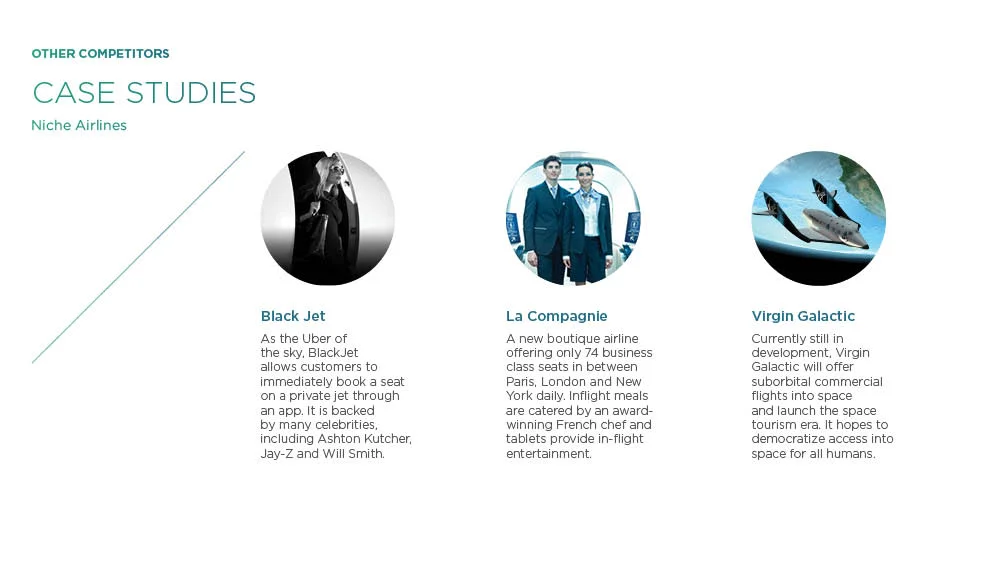
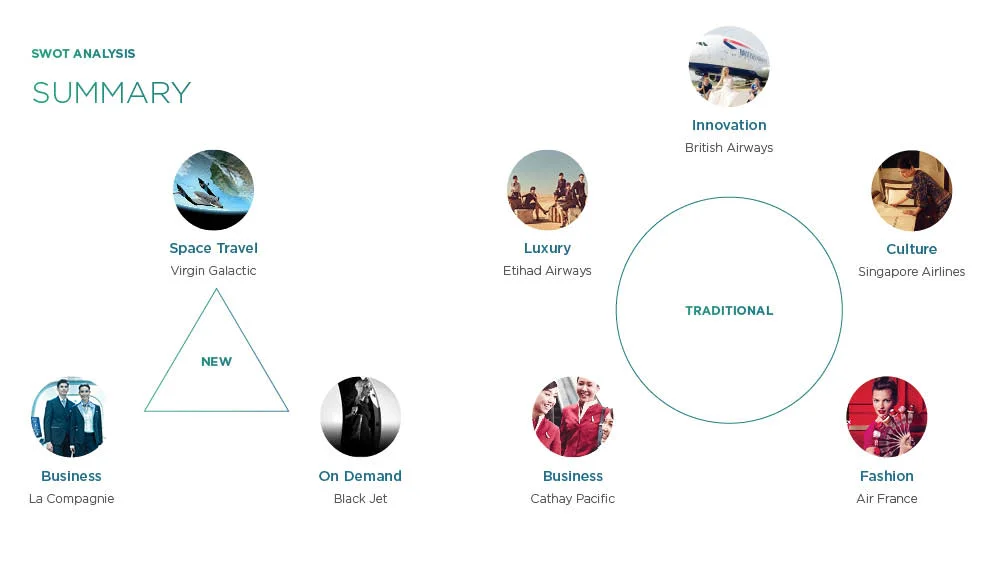
Positioning Matrices
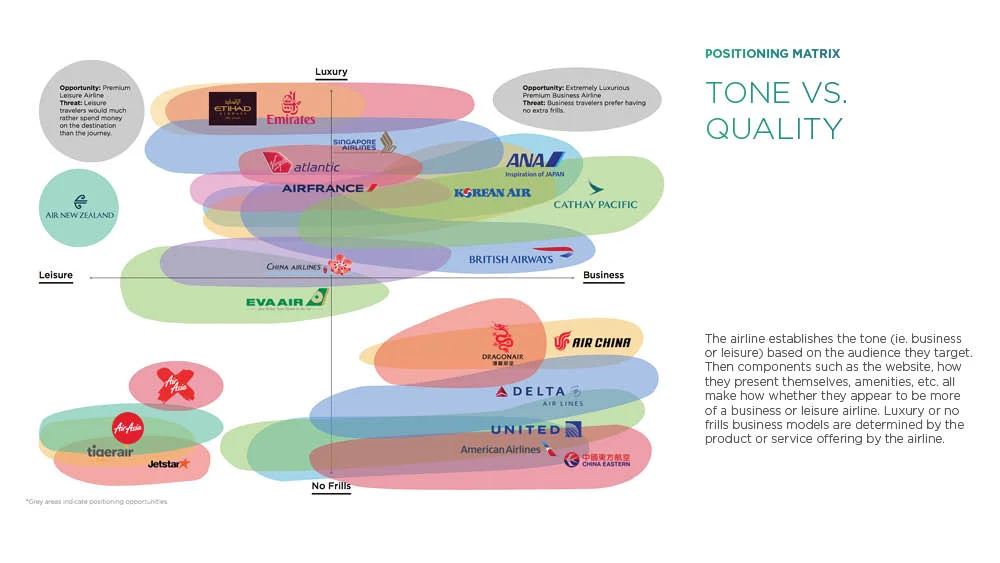
tone vs. quality
No-Frills Business Airlines
Many no frills airlines service business travelers. This type of customer generally do not care for extra amenities.
Examples: Air China, Dragonair, Delta, United, American
Indecisively Split
To generate more revenue, most airlines prefer to target both business and leisure customers while providing reasonable amenities. Most airlines are in this area are competing on cost.
Examples: Virgin Atlantic, Air France, China Airlines, EVA
No-Frills Low Cost Carriers
Most LCCs travel short vacation routes and therefore do not offer premium products or services within a short duration flight.
Examples: Air Asia, Air Asia X, Tiger Air, Jetstar
Extreme Luxury
Etihad and Emirates dominate the luxury airline service model, offering superior products and services to their customers. Other airlines, such as Singapore Airlines, are attempting to close the gap.
Examples: Etihad, Emirates, Qatart, Singapore
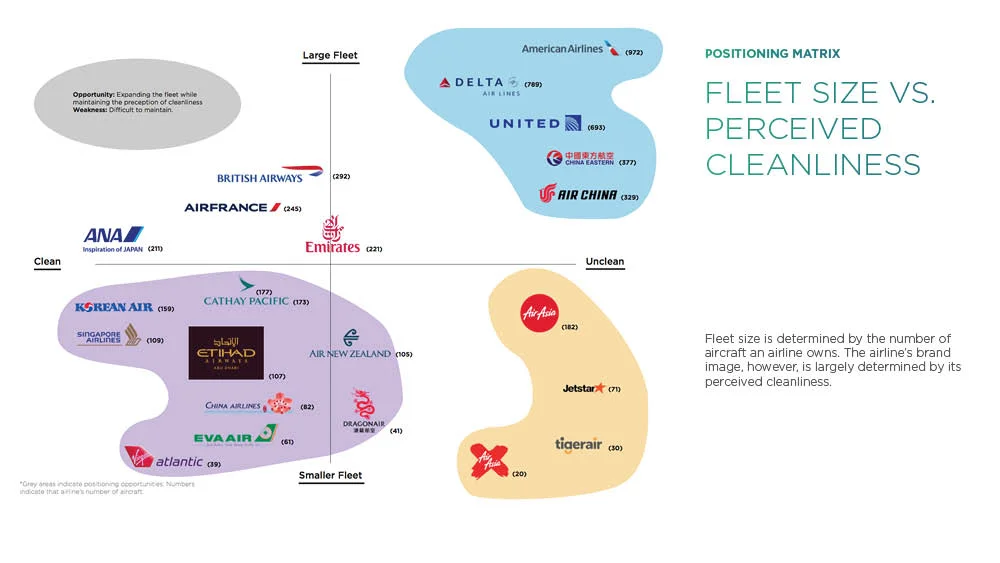
fleet size vs. perceived cleanliness
Large Fleet + Unclean
The world’s biggest airlines with the largest number of aircrafts are seen to be very quick and careless in the maintenance of their planes.
Examples: American Airlines, Delta, United, China Easter, Air China
Large Fleet + Clean
Although an opportunity, maintaining a large fleet aircraft with exceptional detailed maintenance is difficult. Although British Airways, Air France, Emirates and ANA are perceived to be clean, their number of aircraft is not as significant as airlines with larger fleets.
Small Fleet + Unclean
Airlines with smaller fleets and lesser perceived cleanliness are mostly low cost carriers.
Examples: Air Asia, Jetstar, Dragonair, Tigerair, Air Asia X
Small Fleet + Clean
Most international live near or in this quadrant. Having a smaller may be perceived as easier to maintain as quality can be controlled.
Examples: Cathay Pacific, Singapore Airlines, Korean Air
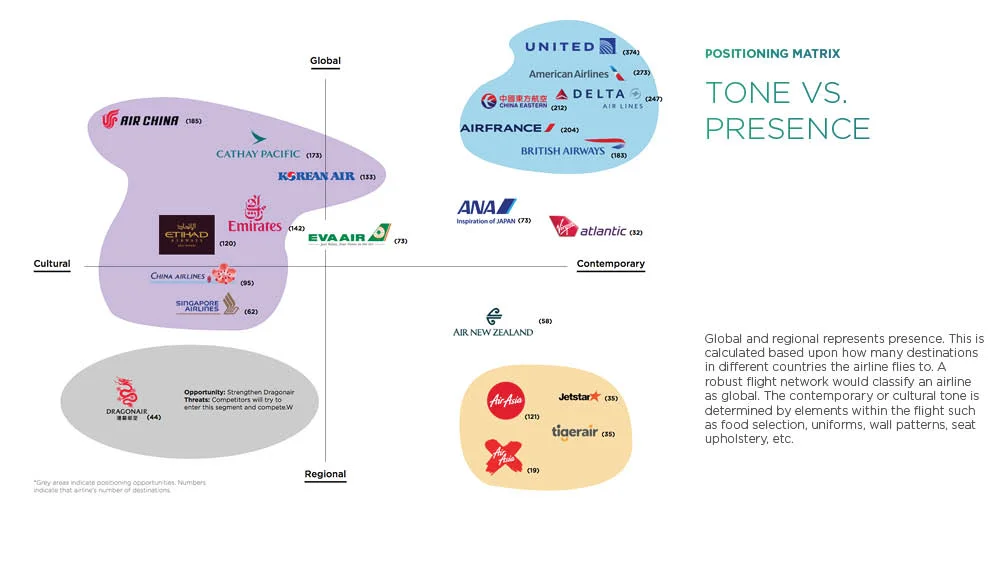
tone vs. presence
Global + Contemporary
The largest airlines in the world are positioning themselves as modern as this may attract more customers.
Examples: United, American, Delta
Regional + Contemporary
Regional airlines, many of which are low cost carriers, are also trying to appeal to as many customers as possible by staying contemporary.
Examples: Jetstar, Air Asia, Tigerair
Cultural + Global
Most international carriers services many destinations around the world and yet still tries to incorporate local cultural elements into their airline.
Examples: Cathay Pacific, Korean Air, Air China, Emirates, Etihad
Cultural + Regional
Although an opportunity, regional airlines should be careful in trying to incorporate local elements as this may drive away or overwhelm foreign customers.
Part of a Concept Project for Rebranding Cathay Pacific
View Entire Project Here →